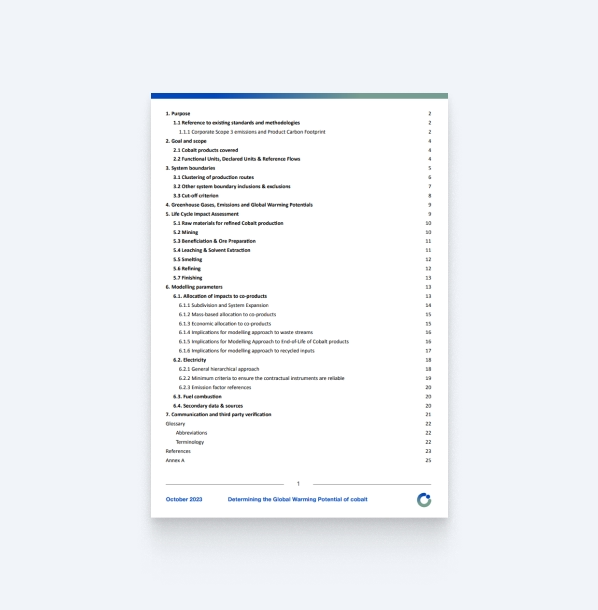
The Product Carbon Footprint Guidance Document for Cobalt Metal and Cobalt Sulphate Heptahydrate
The application of this guidance allows producers and purchasers of cobalt ores and concentrates, cobalt intermediates, and cobalt metal products, as well as stakeholders, to calculate the climate change impact of refined cobalt metal or cobalt sulfate heptahydrate production, i.e., the “product carbon footprint” (PCF) of refined cobalt metal or cobalt sulfate heptahydrate, respectively.
Biogenic emissions and removals
The two guidance are not aligned yet, PACT has been adapted to reflect the forthcoming GHG Protocol Land Sector and Removals Standard. The Cobalt Institute is monitoring the forthcoming EU Battery Regulation and will adapt its approach as necessary once the regulation is finalized.
To align with PACT Methodology: Follow the requirements as indicated in Chapter 3.3.2.4 of the PACT Methodology
Validity period
The current version of the guidance recommend to update PCFs at least in a 5-year cycle or whenever a significant change occurs in the parameters affecting the emission intensity of their production
To align with PACT Methodology: Follow the 3-year cycle or earlier if > 10% variance criteria as indicated in Chapter 3.2.3 of the PACT Methodology
Data quality metrics
The current version of the guidance requires data quality levels consistent with ISO 14044 and the GHG Protocol Product Life Cycle Standard, while PACT defines clear data quality metrics
To align with PACT Methodology: Use the data quality metrics as indicated in Chapter 4.2 of the PACT Methodology
Verification
The current version of the guidance mandates that all reported data shall be accompanied by a certificate granted by an independent third party confirming that the GHG data calculations were done in accordance with the guidance. This is in line with PACT short-term verification requirements
To align with PACT Methodology: Follow the requirements specified in Chapter 5 of the PACT Methodology
.avif)