GS1 × PACT: Carbon Data in Digital Product Passports



GS1 showcases how PACT data model can be embedded into GS1 standards, a milestone for product-level emissions transparency
GS1, the global leader in product identification systems including barcodes and QR codes, has demonstrated that the Partnership for Carbon Transparency (PACT) data model for Product Carbon Footprint exchange can be fully expressed within GS1 technical standards.
This work shows how the PACT data model can be embedded into GS1’sDigital Product Passport (DPP) solution, enabling the exchange of a product’s carbon footprint alongside other sustainability-related information. The result represents a major milestone toward GS1 and PACT’s shared vision of enabling interoperable, scalable exchange of product-level emissions data globally - and allows organizations already using GS1 standards to more easily leverage the PACT data model in their PCF exchanges.
Digital Product Passport with PACT PCF embedded
Embedding the PACT data model within the GS1 Web Vocabulary - the technical language used to describe products and related information on the web- was achieved without difficulty.
“Creating the terms necessary to support the PACT model within the GS1 Web Vocabulary was a straightforward process. There were no aspects of the PACT model that couldn’t be fitted within the schema.org/GS1 Web Vocabulary structure. ”
Phil Archer, GS1
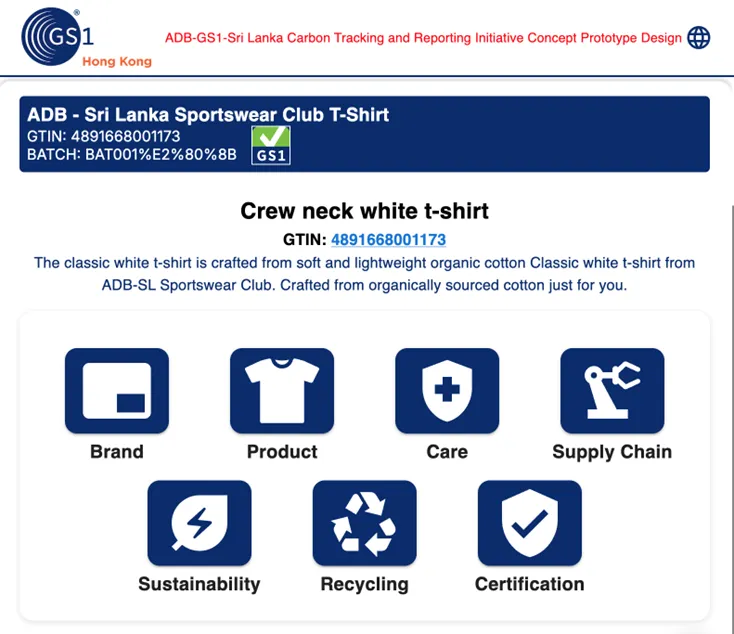
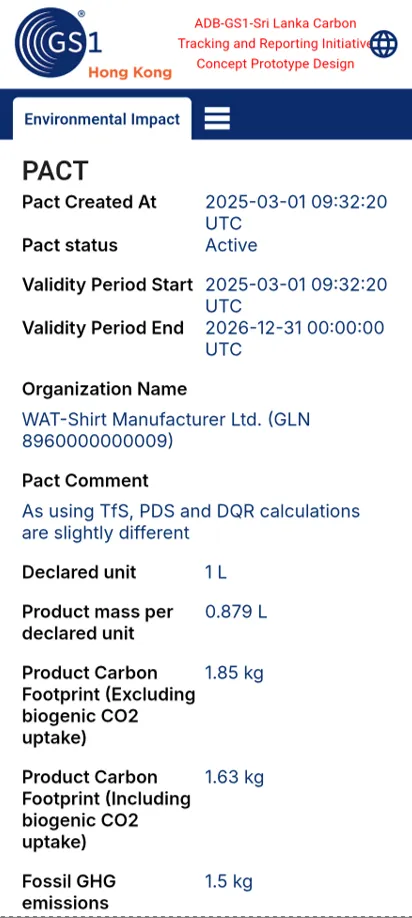
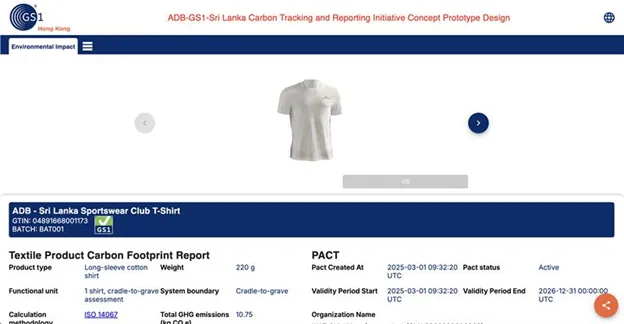
To demonstrate this in practice, GS1 Hong Kong extended its Digital Link Demonstrator to show how a product’s Digital Product Passport can be accessed by end users. Scanning a QR Code powered by GS1 on a t-shirt surfaces product information ranging from care instructions and material composition to the product’s PACT carbon footprint, calculated following the PACT standard.
This illustrates how PCF data can be made both machine-readable and user-accessible using existing, globally adopted standards.
Embedding Carbon Transparency at Scale
In particular, companies can leverage GS1’s standardized product identifiers - such as the Global Trade Item Number (GTIN) - to request, share, and link PCFs across complex supply chains. While there are many use cases for exchanging PCFs, one is rapidly becoming critical: the Digital Product Passport.
Under the EU’s Ecodesign for Sustainable Products Regulation (ESPR),Digital Product Passports are expected to become mandatory for a growing number of product categories by 2027, requiring detailed information on product composition, sustainability attributes, and lifecycle impacts.
“Integrating the PACT data model into GS1’s Digital Product Passport demonstrator is a major milestone toward lowering barriers for sharing standardized product-level carbon data at scale,” said Naama Avni Kadosh, Director of Partnership for Carbon Transparency “We are excited to be partnering with GS1 on this work, and have already seen interest across corporates and technology providers to leverage this capability to accelerate the exchange of product-level sustainability data.”
“GS1 standards are designed to enable data to move seamlessly across value chains,” said Robert Beideman, Chief Product Officer at GS1. “Embedding the PACT data model into our web standards demonstrates how product carbon footprint data can be exchanged in a consistent and interoperable way, using the same identifiers and technologies that companies already rely on everyday.”
Technical and Market Impact
The integration delivers several important benefits:
Interoperability: PACT standardizes PCF data formats and exchange protocols, enabling consistent interpretation and use across carbon accounting tools, lifecycle assessment systems, and data platforms.
Scalability: GS1 standards are already used by millions of companies worldwide. Embedding PACT’s data model within GS1 standards will accelerate adoption of the exchange of product-level carbon data across global value chains.
Regulatory readiness: As sustainability reporting requirements expand under frameworks such as ESRS, DPP, CBAM, and others, the ability to share standardized, auditable product-level sustainability data simplifies compliance and reporting workflows.
Data quality and comparability: PACT’s methodology emphasizes primary, supplier-specific data and consistent calculation rules, improving the accuracy and comparability of product-level emissions data.
Enabling Actionable Transparency
As companies accelerate decarbonization efforts, demand for granular, supplier-specific Scope 3 emissions data continues to grow. PACT’s focus on primary, product-level data reduces estimation uncertainty and supports more effective emissions reduction strategies.
With this integration, companies already using GS1 standards can more easily share product carbon footprint data, accelerate preparedness for Digital Product Passports, and advance product-level sustainability transparency across global value chains.
Learn More
Technical Specifications for PCF Data Exchange (Version 3.0.3)
GS1 Digital Product Passport Overview
Go to GS1 Demonstrator
The technical detail of PACT Data Model expressed as an extension to the GS1 Web Vocabulary
