Five things China taught me about the future of carbon data that I wasn't expecting to learn


I've spent the last three years working on what I'd describe as the plumbing of corporate sustainability: the infrastructure that lets product carbon data actually move across supply chains, rather than sit in spreadsheets that never leave a single company's servers.
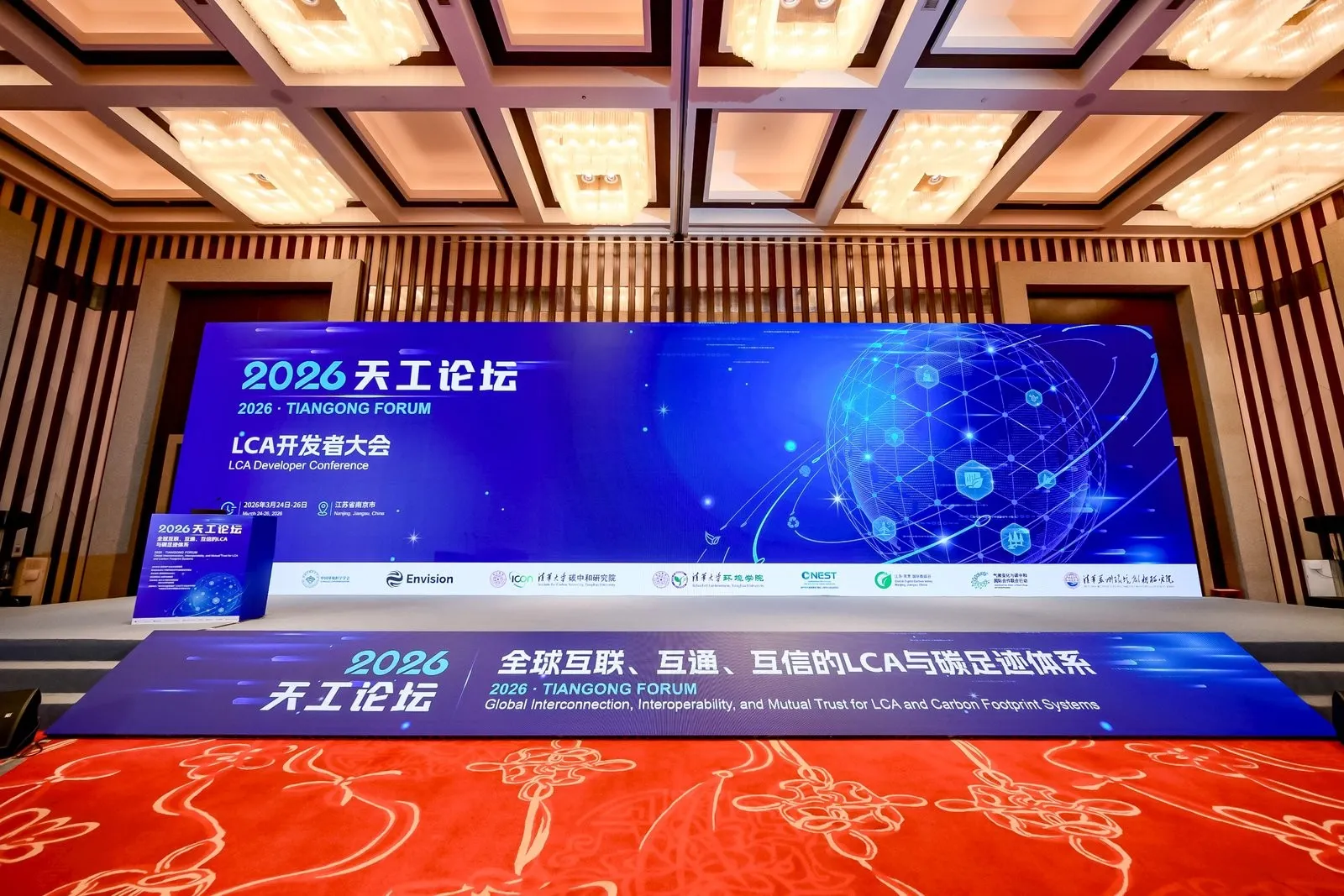
In March I spent seven days in Beijing and Nanjing. I went in expecting to explain our work. I came back having taken more notes than on any trip in recent memory.
Here's what surprised me.
1. The conversation has already moved on, and we should update our assumptions
The most striking thing about the week wasn't any single meeting. It was a question that kept coming up, in different rooms and different contexts:
How do we connect?
Not: what is a product carbon footprint? Not: why does this matter? Those conversations are over in China, at least among the institutions I met. The question is now operational. How do Chinese systems connect to international ones? How does data generated here get trusted by a buyer in Stuttgart or Seoul?
That's a significant shift. And it should prompt those of us working in the global sustainability space to ask: are we still explaining things that sophisticated counterparts in other markets have already moved past?
2. China is technically ahead in some areas, and that's not part of our narrative yet
I sat with engineers who have built a working hourly green electricity traceability system. Blockchain-anchored. 225 buyers. 36 renewable suppliers. Five months of live operation. Hourly matching between generation and consumption.
This is more sophisticated than most of what I've seen built in Europe or North America in this space.
We talk a lot (I've been guilty of this too) about carbon data infrastructure as something that flows outward from Western standards bodies to other markets. That framing is becoming inaccurate. In some areas, the innovation is already happening elsewhere. The question is whether global systems are designed to receive it, or whether we inadvertently build infrastructure that can only learn from itself.
3. The entry points are different. The destination is the same.
What struck me most about conversations in China is that the demand for carbon data infrastructure is just as real as anywhere else. It just arrives from a different direction.
In many European contexts, the starting point is a commitment: a net zero target, a reporting obligation, a belief that transparency is the right thing to build toward. The commercial case follows.
In China, the starting point is often market access: a manufacturer whose European customers are asking for product carbon data, a clean energy asset that is commercially invisible without internationally recognised measurement, an exporter navigating new compliance requirements. The values follow, because once you have built the infrastructure, you start to see what else it can do.
Two different on-ramps. The same road. And both, it turns out, lead to the same fundamental question: how do we build systems that make carbon data trustworthy enough to act on?
That convergence is one of the more hopeful things I brought back from the trip.
4. The biggest risk isn't greenwashing. It's fragmentation.
What I saw taking shape is an ecosystem of databases, platforms, and methodologies being built in parallel, by universities, industry associations, government-linked bodies, private companies, without a shared architecture for how they connect.
Everyone is building. Not everyone is building to connect.
The answer isn't a single global database. That was never going to work politically or practically. The answer is more like the early internet: shared protocols that let different systems talk to each other, while each keeps control of its own infrastructure. China is the first place where you can really feel the weight of that design choice, because the stakes of getting it wrong are enormous on both sides.
If this continues without a common architecture, the result is a patchwork: multiple carbon data systems, each internally coherent, none reliably interoperable with each other or with global supply chains. That's bad for exporters who need their data trusted abroad. It's bad for international buyers who can't verify what they're receiving. And it quietly undermines years of work on global standards that assumed adoption would be more linear than it actually is.
The fragmentation risk is real, and it's not unique to China. It's the central challenge for anyone trying to build carbon data infrastructure that actually works at global scale.
5. Governance is the conversation nobody wants to have, but it's the one that matters most.
Technical interoperability is the visible part of the challenge. But underneath almost every conversation this week was a different question: who controls the rules?
If your data enters a global system, who decides what it's worth? Who has a seat in the governance structure? What happens when methodologies from different regions produce different numbers for the same product? How is neutrality guaranteed when the body setting the standard is headquartered thousands of miles away?
These aren't obstructionist questions. They're legitimate ones. And they signal something important: the next phase of carbon data infrastructure won't be won on technical elegance. It will be won or lost on governance trust. The systems that scale will be the ones where every major market sees itself as a co-designer, not just a recipient.
That's a harder problem than writing a technical specification. But it's the real one.
I lead PACT, the Partnership for Carbon Transparency, a global open infrastructure for product-level carbon data exchange, housed within WBCSD. If any of this resonates with challenges you're navigating in your own work, I'd genuinely love to hear from you.
Contact pact@wbcsd.org