How Sustainability Standards Can Move Faster by Doing Less: A Call for Pragmatism


.avif)
The sustainability world is overflowing with ambition: detailed standards, complex architectures, perfect future-state models for exchanging environmental data. But despite all this energy, real progress on Product Carbon Footprints (PCFs) often moves painfully slowly. Suppliers struggle to calculate their first PCF. Solution providers hesitate to build without perfect clarity. Industry-specific groups debate ideal future designs while companies are still emailing spreadsheets.
The truth is simple but uncomfortable:
Our pursuit of perfection is slowing down decarbonization.
It’s time for a shift in mindset, a call for pragmatism.
The gap between ambition and adoption
Over the past few years, hundreds of global companies have committed to exchanging PCFs. But adoption remains limited because we treat standards like academic exercises rather than practical tools. We over-engineer before we validate. We debate before we build. We design for every edge case instead of solving the most common ones.
The result:
Lots of frameworks. Very few exchanges.
Sustainability doesn’t need more theory. It needs working, good-enough solutions that companies can use today to get started.
Where pragmatism beats perfection
Below are concrete places where a pragmatic approach has consistently accelerated progress and where waiting for perfect solutions would have meant doing nothing at all.
1. REST APIs vs. Blockchain: Use what works
Blockchain has recently created a lot of noise in the sustainability world as a “cornerstone of transparency”. While it may be theoretically appealing: decentralized trust, immutability, cryptographic proofs, most companies don’t need it for the PCF exchange. They need something much simpler:
A stable, well-documented HTTP REST API.
REST APIs are:
- ubiquitous in corporate IT stacks
- inexpensive to implement
- easy for suppliers, SMEs, and solution providers
- fast to iterate and test
A single working endpoint does more for interoperability than months of whitepapers on distributed ledger theory. This is exactly the approach PACT has taken - PACT Technical Specifications are built on HTTP REST, making them accessible to any standard corporate IT team.
2. Product ID mapping via invoices (not perfect, but surprisingly effective)
Perfect master data alignment across global supply chains is a fantasy. Instead of waiting for clean GTINs everywhere, companies in early PCF pilots have mapped products using:
- invoice line-item descriptions
- ERP internal codes
- SKU-level metadata
- simple text-matching heuristics
Is it perfect? No.
Does it enable progress now? Absolutely.
This is the essence of pragmatism: unlock value with what exists, then improve over time.
3. Run pilots with partial or estimated PCFs
Waiting for 100% primary, fully verified PCFs means never starting.
Most organizations can today provide:
- hybrid PCFs
- partially estimated upstream components
- cradle-to-gate values with reasonable assumptions
- structured data aligned to a minimum viable schema
Interoperability isn’t proven with perfect data; it’s proven by whether systems can exchange structured information at all.
Start with what’s available. Let quality improve naturally through use, audit, and feedback.
4. Spreadsheets as a starter pack in sustainability
Experts love advanced digital ecosystems. But the most foundational tool for supplier enablement remains:
A simple, standardized Excel template.
It is:
- accessible
- cheap
- flexible
- understood by every supplier on Earth
A supplier using Excel is participating and participation is the main barrier, not methodological sophistication.
5. A simple directory beats a perfect identity system
Before building a decentralized identity graph with cryptographic proofs, the ecosystem needs something much more basic:
A list of who is who and where to send a PCF request.
Name, company, endpoint URL.
It’s not glamorous, but it solves a real problem today.
Where PACT must also be more pragmatic
PACT's vision for a decentralized, interoperable ecosystem is worth pursuing, but vision alone won't drive adoption. We need to meet companies where they are: offering spreadsheet-based exchange pathways which can be easily integrated in digital software, simplified minimum viable methodologies, and the ability to run pilots before the ecosystem reaches full maturity.
If PACT is to become the global infrastructure for carbon data exchange, it must be not only technically sound but practically adoptable.
Three principles to carry forward
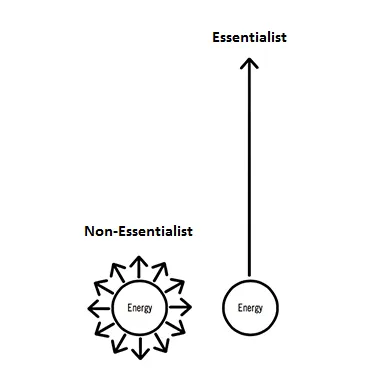
1. Build for the 80%, not the edge cases
Solve the common, high-impact problems first. Add sophistication once adoption is real.
2. Start small, test quickly, iterate in public
A working pilot teaches more than a library of specifications.
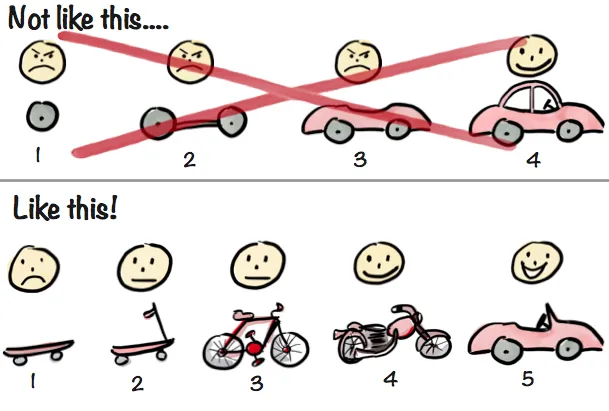
3. Treat standards like products
They should have user journeys, support pathways, feedback loops, and a clear path from MVP to maturity.
Standards gain legitimacy through use, not through perfection.
Pragmatism is not lowering ambition. It is sequencing ambition
Start simple. Download PACT Methodology.
Start now. Download Technical Specifications.
And keep improving. Send us your question.
